

Setting goals is a way to make your health and life better.. A lot of people have trouble because they make goals that are too big or not realistic. That is where short term goals come in. If you have ever wondered what a good short term goal is it is something that you can do. It helps your body or mind in a short time.
A good short term goal is something you can do in a days or weeks. For example you can exercise three times this week. Drink more water every day. You can also eat vegetables with your lunch every day. Sleep for eight hours. One more sample is walking for 30 minutes every day for 10 days.
Short term goals like these can really help you because they are easy to achieve and they make you feel good, about yourself.
Table of Contents
What Is a Healthy Short-Term Goal?
A healthy short-term goal is a wellness-related objective that can be completed in a short timeframe, usually within:
- 1 day
- 1 week
- 2 weeks
- 1 month
These goals focus on habits that improve:
- Physical health
- Mental health
- Emotional balance
- Nutrition
- Fitness
- Sleep quality
- Stress management
Unlike long-term goals such as losing 20 kilograms or running a distance short-term goals are small steps that help you move forward bit by bit.
15 Healthy Short-Term Goals
Healthy short-term goals are small, realistic actions you can achieve within a few days or weeks.
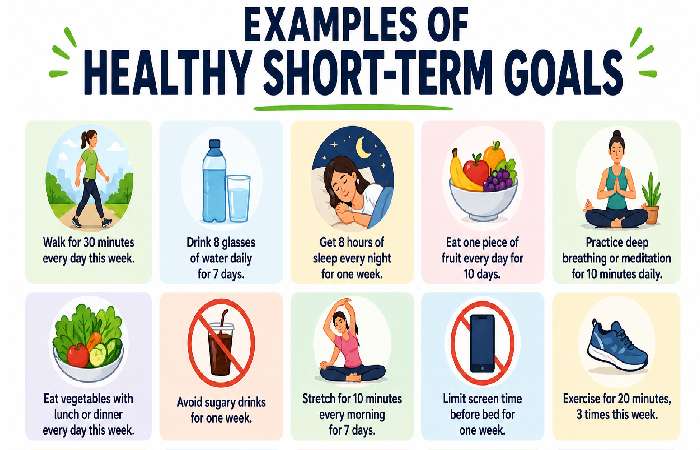
1. Walk 30 Minutes Every Day for One Week
Walking is an great way to exercise. It helps your heart makes you feel better helps you lose weight and reduces stress.
How to Do It:
- Walk in the morning, evening, or after meals
- Use comfortable shoes
- Walk outdoors or indoors
Benefits:
- Better circulation
- Increased stamina
- Improved mental health
- Better sleep quality
Timeframe:
7 days
2. Drink 8 Glasses of Water Daily for 10 Days
I really think drinking water is important. It helps with my energy levels, digestion, skin health and focus.
Here’s how I plan to do it:
- I carry a water bottle that I can use again and again.
- Have a glass of water soon as I wake up in the morning.
- I try to drink water times during the day.
Benefits:
- Prevents dehydration
- Supports digestion
- Improves focus
- Healthier skin
Timeframe:
10 days
3. Sleep 8 Hours Every Night for One Week
Getting sleep is really important, for your body. It helps your body get better. It also helps you think of things and feel happy. Your body can fight off sicknesses better when you get enough sleep.
How to Do It:
- Set a fix bedtime
- Avoid screens before bed
- Keep room dark and quiet
Benefits:
- More energy
- Better concentration
- Stronger immunity
- Reduced stress
Timeframe:
7 nights
4. Eat One Fruit Daily for Two Weeks
Fruits give vitamins, minerals, antioxidants, and fiber.
How to Do It:
- Add fruit to breakfast
- Keep bananas, apples, or oranges ready
- Replace sugary snacks with fruit
Benefits:
- Better digestion
- Natural energy
- Strong immunity
- Reduced junk food cravings
Timeframe:
14 days
5. Stretch for 10 Minutes Every Morning for 7 Days
Stretching improves flexibility, posture, and reduces body stiffness.
How to Do It:
- Stretch neck, shoulders, legs, and back
- Do slow movements
- Breathe deeply
Benefits:
- Less stiffness
- Better posture
- Improved movement
- Reduced stress
Timeframe:
1 week
6. Avoid Sugary Drinks for One Week
Reducing soda and sugary beverages lowers excess sugar intake.
How to Do It:
- Replace with water
- Try lemon water or plain milk
- Read drink labels
Benefits:
- Lower sugar intake
- Better hydration
- Weight management support
- Stable energy levels
Timeframe:
7 days
7. Eat Vegetables With Lunch Daily for 10 Days
Vegetables are rich in fiber, vitamins, and nutrients.
How to Do It:
- Add salad or cooked vegetables
- Include carrots, spinach, cucumber, beans
Benefits:
- Better digestion
- Improved nutrition
- Supports immunity
- Helps fullness
Timeframe:
10 days
8. Practice Deep Breathing for 5 Minutes Daily
Breathing exercises help calm the mind and reduce stress.
How to Do It:
- Sit comfortably
- Inhale slowly for 4 seconds
- Exhale slowly for 4 seconds
Benefits:
- Reduces anxiety
- Improves focus
- Relaxes body
- Better emotional control
Timeframe:
7 days
9. Limit Screen Time Before Bed for One Week
Too much screen exposure before sleep can affect rest.
How to Do It:
- Stop phone use 30 minutes before sleep
- Read a book instead
- Use night mode if needed
Benefits:
- Better sleep quality
- Faster sleep onset
- Less eye strain
Timeframe:
7 nights
10. Do 20 Minutes of Exercise 3 Times This Week
Short workouts can improve fitness without needing long sessions.
How to Do It:
- Try jogging, bodyweight exercises, yoga, cycling
Benefits:
- Stronger muscles
- Better endurance
- Mood boost
- Heart health support
Timeframe:
1 week
11. Eat Breakfast Every Day for 7 Days
A balanced breakfast can improve concentration and energy.
How to Do It:
- Choose eggs, oats, fruit, milk, or whole grains
Benefits:
- Better focus
- Steady energy
- Reduced overeating later
Timeframe:
1 week
12. Take the Stairs Instead of Elevator for One Week
This adds simple movement to daily life.
How to Do It:
- Use stairs whenever possible
- Start slowly if many floors
Benefits:
- Burns calories
- Strengthens legs
- Improves stamina
Timeframe:
7 days
13. Write a Gratitude Journal for 10 Days
Mental health is part of healthy living. Gratitude journaling improves outlook.
How to Do It:
- Write 3 things you appreciate daily
Benefits:
- Positive mindset
- Reduced stress
- Better emotional balance
Timeframe:
10 days
14. Replace Junk Snacks With Healthy Snacks for One Week
Healthy snacks help control hunger and improve nutrition.
How to Do It:
- Choose nuts, fruit, yogurt, boiled eggs, roasted seeds
Benefits:
- Better nutrition
- More energy
- Fewer sugar crashes
Timeframe:
7 days
15. Spend 15 Minutes Outdoors Daily for One Week
Fresh air and sunlight support mood and wellness.
How to Do It:
- Walk outside
- Sit in a park
- Spend time in natural light
Benefits:
- Improved mood
- Vitamin D support
- Reduced stress
Timeframe:
7 days
Why Short-Term Goals Are Important
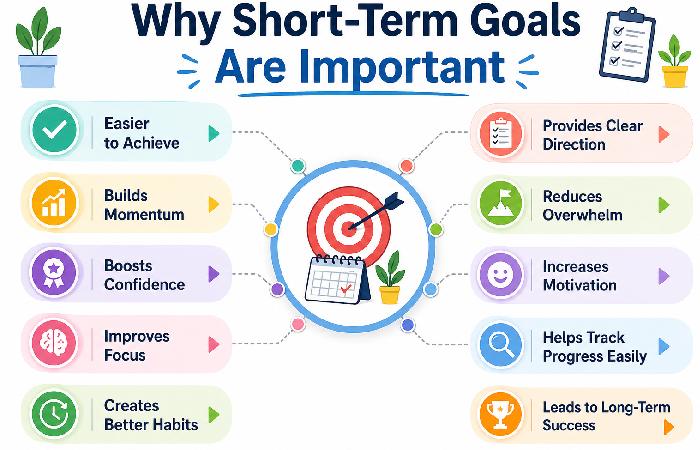
Healthy short-term goals work well because they are easy to start and stick to. You focus on making changes to your daily life and you feel good, about achieving them. Short-term goals help you build confidence.
| Benefit | Explanation |
| Easier to achieve | Small goals feel manageable |
| Builds motivation | Success encourages consistency |
| Reduces stress | Less pressure than large goals |
| Creates habits | Repetition leads to long-term change |
| Tracks progress | Easier to measure weekly results |
Characteristics of a Healthy Short-Term Goal
Not every goal is useful. A good short-term health goal should be:
| Characteristic | Meaning |
| Specific | Clearly states what to do |
| Realistic | Can fit your current lifestyle |
| Measurable | Progress can be tracked |
| Time-based | Has a clear deadline |
| Positive | Improves wellness |
Examples of Healthy Short-Term Goals
Fitness Goals
| Goal | Timeframe |
| Walk 30 minutes daily | 7 days |
| Do yoga 3 times | 1 week |
| Take stairs instead of elevator | 2 weeks |
| Stretch every morning | 10 days |
Nutrition Goals
| Goal | Timeframe |
| Eat vegetables at dinner daily | 1 week |
| Replace soda with water | 14 days |
| Eat breakfast every day | 7 days |
| Limit fast food to once this week | 1 week |
Mental Health Goals
| Goal | Timeframe |
| Meditate 10 minutes daily | 1 week |
| Journal before bed | 7 days |
| Spend 1 hour offline daily | 10 days |
| Practice gratitude nightly | 2 weeks |
Sleep Goals
| Goal | Timeframe |
| Sleep before 10:30 PM | 7 nights |
| Avoid screens before bed | 1 week |
| Get 8 hours sleep nightly | 10 days |
Healthy Short-Term Goals vs Unhealthy Goals
| Healthy Goal | Unhealthy Goal |
| Walk daily for a week | Lose 10 kg in 5 days |
| Drink more water | Stop eating completely |
| Sleep earlier nightly | Stay awake to exercise more |
| Eat balanced meals | Skip meals to lose weight |
Healthy goals focus on sustainability, not extreme behavior.
How to Set a Healthy Short-Term Goal
Use the SMART method:
| Letter | Meaning |
| S | Specific |
| M | Measurable |
| A | Achievable |
| R | Relevant |
| T | Time-bound |
Mistakes People Make
1. Setting Goals Too Big
Lose 15 kg this month
Walk daily this month
2. Being Too Vague
Eat better
Add salad to lunch daily
3. No Deadline
Exercise more
Exercise three times this week
4. Trying Too Many Goals
Choose one or two at a time.
Final Answer
If someone asks you to give an example of a goal that you can achieve in a short time the best answer is something that you can really do and that will make you healthier in a short time. A healthy short-term goal is something that improves your health. You can do it in a short time.