

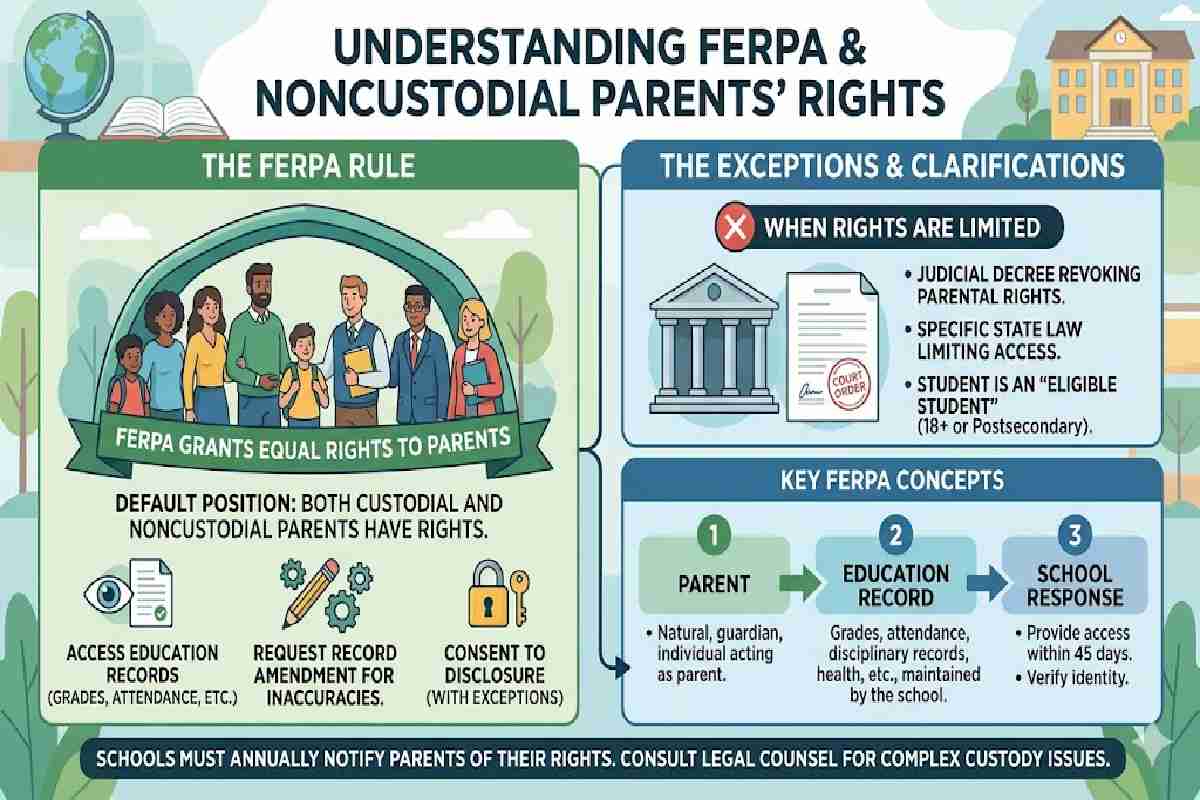
The Family Educational Rights and Privacy Act, which is also known as the Family Educational Rights and Privacy Act is a law, in the United States that helps keep student education records. At the time the Family Educational Rights and Privacy Act gives some rights to parents and students who are old enough.
One thing that schools and families often want to know is if parents who do not have custody of their children can see their student records. According to the Family Educational Rights and Privacy Act the answer is usually yes. However there are some exceptions. For example if a court orders it or if a state law or a binding document says so then the rights of parents who do not have custody can be taken away or limited.
Table of Contents
What Is FERPA?
The Family Educational Rights and Privacy Act, also known as FERPA was enacted in 1974. FERPA applies to schools that receive funding from the U.S. Department of Education. This law gives parents rights regarding their childs education records.
The parents have these rights until the student turns 18 years old or the student attends an institution like a college or university.
At that point the rights under FERPA transfer to the student, who then becomes a student, under FERPA.
Who Is a Noncustodial Parent?
A noncustodial parent is usually a parent who does not have physical care of the child after a divorce, parting or other family court decisions.
Just because of custody status FERPA rights are not automatically taken away.
Under FERPA rules both parents. Custodial and noncustodial. Generally have rights to access unless there is a legal restriction that says otherwise.
FERPA rights are usually retained by both types of parents.
Core FERPA Rule for Noncustodial Parents
As specified by FERPA:
Schools have to let both parents who are living with the kid and those who are not see the kids school records. This is the case unless the school has a court order or some other kind of document that says one parent cannot see those records.
That means schools cannot say no, to one parent just because the other parent says so.
- “I have sole custody.”
- “The other parent should not receive records.”
- “We are divorced.”
The school needs actual legal documentation—not verbal claims.
What Records Can Noncustodial Parents Access?
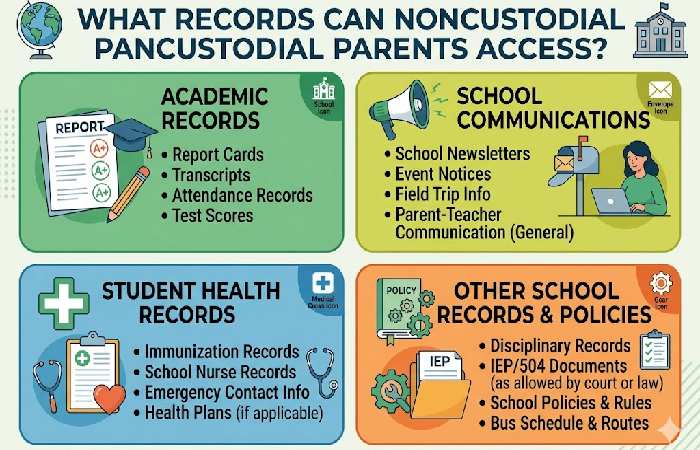
FERPA generally allows access to education records maintained by the school.
Common Examples
| Record Type | Usually Accessible? |
| Report cards | Yes |
| Attendance records | Yes |
| Discipline records | Yes |
| Test scores | Yes |
| Transcripts | Yes |
| IEP / 504 plans | Yes |
| Enrollment records | Yes |
| Health records kept by school | Often Yes |
| Teacher notes kept privately | Usually No |
| Law enforcement unit records | Usually No |
What Schools Must Do
When a noncustodial parent requests records, schools generally must:
- Verify identity
- Check for any custody restrictions or court orders
- Provide inspection/review access within 45 days
- Follow the same FERPA standards applied to custodial parents
Timeline Requirement
FERPA requires schools to comply with requests to inspect records within a reasonable period, not more than 45 days after the request.
When Access Can Be Denied
A school may deny or restrict a noncustodial parent’s access if there is evidence such as:
Legal Restrictions
| Restriction Type | Effect |
| Court order terminating parental rights | Access may end |
| Protective order | Access may be limited |
| Divorce decree specifically removing educational rights | Access may be denied |
| State law restricting disclosure | School must comply |
| Guardianship transfer | Rights may shift |
Sole Custody vs FERPA Rights
Many parents assume that sole custody automatically blocks the other parent from school records. That is often incorrect.
| Situation | FERPA Access Likely? |
| One parent has primary custody only | Yes |
| One parent has no visitation but rights intact | Possibly Yes |
| Rights legally terminated | No |
| Court specifically bars school record access | No |
Can One Parent Tell the School to Block the Other Parent?
Usually no.
A custodial parent cannot simply instruct the school to stop communicating with the other parent unless supported by legal documentation. FERPA rights belong under law, not by personal preference.
If the Student Is 18 or in College
Once a student becomes an eligible student, FERPA rights transfer from parents to the student.
Then schools generally need student consent before sharing records, except in limited situations such as dependency exceptions or other lawful disclosures.
Best Practices for Noncustodial Parents
If requesting records:
| Step | Action |
| 1 | Submit request in writing |
| 2 | Provide ID |
| 3 | Include custody documents if helpful |
| 4 | Ask for FERPA compliance officer |
| 5 | Keep copies of all communication |
Best Practices for Schools
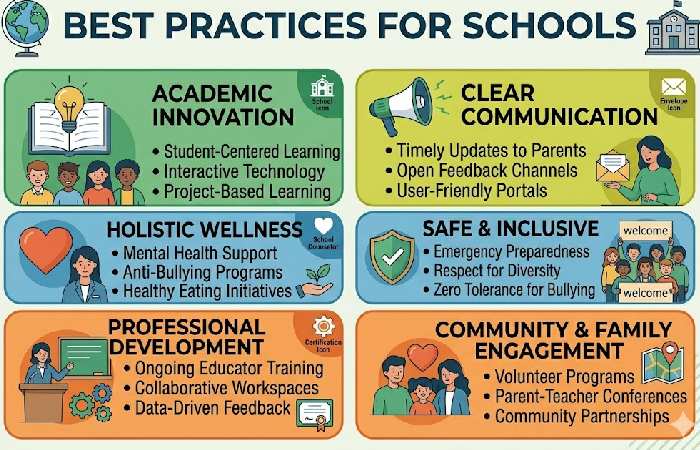
Schools should:
- Use neutral procedures for both parents
- Request official legal documents before denying access
- Train office staff on FERPA rules
- Avoid taking sides in custody disputes
- Document responses carefully
Common Misunderstandings
Myth 1: Noncustodial means no rights
False. FERPA often still grants access.
Myth 2: Divorce automatically removes rights
False. Only legal restrictions matter.
Myth 3: School can rely on one parent’s statement
False. Documentation is generally required.
Myth 4: Schools can ignore requests indefinitely
False. FERPA has response timelines.
If a School Refuses Access
A noncustodial parent may:
- Ask for written explanation
- Provide missing court documents
- Escalate to district administration
- File a FERPA complaint with the U.S. Department of Education if appropriate
Final Thoughts
The law says that noncustodial parents have the rights as custodial parents when it comes to looking at their childs school records. This is what FERPA says.. There are some exceptions. If there is a court order or a state law that says something then that is what the school has to follow. The school should not just assume something because of what a custody label says. They should look at the legal papers.
For families who are going through a divorce or fighting over custody it is really important to understand what FERPA is. FERPA can help prevent a lot of confusion. When people know what FERPA says it can help make sure that both parents are kept in the loop about what’s going on with their childs education. FERPA is important for parents to know about so they can stay informed, about their childs school records.
Also Read: which of the following is an example of a healthy short-term goal?